
Graduate Course Descriptions: Spring 2026
Need more info?
For the most up-to-date list of classes offered, visit the dynamic schedule. For questions about classes, consult our graduate advising page or contact the listed instructor. To see what we'll be offering in future semesters,
visit our two-year course rotation template. Interested in studying literature, taking a writing workshop, improving your writing
skills, or brushing up your teaching skills, but don't want to pursue a degree? You
should apply as a Non-Degree Seeking Student.
Jump to:
- Applied Linguistics/TESOL Courses
- Creative Writing Courses
- Literary & Cultural Studies Courses
- Writing, Rhetoric, & Technical Communication Courses
Click on each course title to read the professor's full course description; click on each thumbnail image to view the course flyer.
Applied Linguistics:
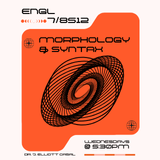 ENGL 7/8512 - Morphology & Syntax | Dr. J. Elliott Casal | Wednesdays 5:30-8:30pm
This course on Morphology and Syntax examines how words and sentences are structured,
how those structures vary across languages, and how they emerge from usage over time.
We begin with foundational concepts from traditional and generative approaches, then
we transition to more functional, cognitive, and usage-based perspectives on grammatical
patterning. In this way, students develop a grounding in traditionally important perspectives
on language structure, as well as familiarity with cutting edge perspectives of linguistic
theory.
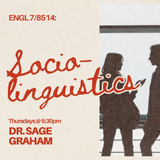 ENGL 7/8514 - Sociolinguistics | Dr. Sage Graham | Thursdays 5:30-8:30pm
In this class we’ll use language as a lens to explore the interplay between communicative
choices and social relationships. Using factors like age, gender, ethnicity, geography,
and social class, we’ll examine naturally-occurring spoken, written, and digital language.
Students will choose from a wide range of contexts and conduct research on how the
language choices people make reflect (and reinforce) our sense of the world and our
relationships with one another.
ENGL 7/8531 - Theory/History in ESL | Dr. Emily Thrush | Mondays 5:30-8:30pm
Survey of relation of linguistic principles to second language acquisition.
ENGL 7/8532 - Theory of Skills Assessment in ESL | Dr. Emily Thrush | Online
Application of theories of teaching second language skills with emphasis on testing
in a second language.
ENGL 7/8532 - Theory of Skills Assessment in ESL | Dr. Lyn Wright | Online
Application of theories of teaching second language skills with emphasis on testing
in a second language.
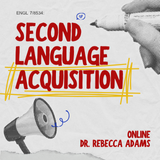 ENGL 7/8534 - Second Language Acquisition | Dr. Rebecca Adams | Online
In this course, we will delve into current, research-based understandings of how languages
are learned. Our focus will be three primary questions related to learning and teaching
of additional languages—languages learned after the first language is acquired: How
are additional languages learned? What factors influence acquisition of additional
languages (e.g., why are some people more successful at learning languages while others
struggle? What personal factors, learning conditions, and social situations promote
the acquisition of additional languages? How are language learning and language teaching
related? How does second language acquisition theory color our understanding of how
to teach languages in the classroom? Along the way, we will examine the linguistic,
contextual, cognitive, individual, and social factors that impact language learning.
Creative Writing:
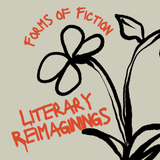 ENGL 7471 - Forms of Fiction | Dr. Sarai Walker | Wednesdays 5:30-8:30pm
The topic for this class is literary re-imaginings. We will examine fiction that seeks
to reimagine, retell, subvert and expand source material that may include classic
novels, myths, fairy tales, historical events and the lives of real people. From classic
literary re-imaginings like Wide Sargasso Sea by Jean Rhys, to more recent ones like James by Percival Everett, to mythic re-imaginings like Circe by Madeline Miller and speculative, historical re-imaginings like The Yiddish Policemen’s Union by Michael Chabon, we will look at a range of novels and stories (as well as films
and Broadway musicals) that reimagine in a variety of ways, using a variety of genres.
Students will have a chance to add their own selection to the reading list and will
write their own reimagined piece of fiction for workshop. If you’re not an English
graduate student, email smwlker6@memphis.edu to request permission to take the class.
 ENGL 7475 - Literary Publishing | Prof. Courtney Santo | MW 2:20-3:45
This experiential learning course engages students in the production, marketing, distribution,
and management of Pinch, the award-winning, internationally distributed literary journal, housed at The University
of Memphis. Each fall and spring, Pinch prints a journal of 150-pages of fiction, poetry, nonfiction and art, while each
week it publishes work digitally at Pinch Journal Online (PJO). In addition to a contextual and historical understanding of literary publishing,
students will evaluate, edit, and layout literary submissions in digital and print
form; develop a marketing and publicity plan for an issue of the journal; prepare
journals for distribution; and learn to manage budgets and personnel. This course
also provides an introduction to trade publishing with a focus on building a career
as a writer. Any graduate student interested in literary publishing is encouraged
to enroll. Email cmsanto@memphis.edu with any questions.
 ENGL 7601 - Creative Nonfiction Workshop | Prof. Courtney Santo | Mondays 5:30-8:30pm
Contemporary discourse is shaped by nonfiction writers. In this nonfiction workshop,
students will study examples of memoir, cultural criticism, personal essay, feature
writing, science writing, and more drawn from Pulitzer Prize, National Book Award,
and National Book Critics Circle Award winners. By reading and analyzing such works
students will learn how to apply the craft of nonfiction to their own work. As part
of a community of writers, students will help each other with the translation of ideas
from mind to page by providing feedback on the application of craft. Students will
be expected to write two original pieces of nonfiction totaling thirty (30) pages.
 ENGL 7602 - Fiction Workshop | Dr. Eric Schlich | Tuesdays 5:30-8:30pm
Students’ original fiction is the primary focus for this graduate workshop. Your reading
in this class should be focused not on the lit-crit question what does this mean? but on the more writerly how does this work?. You will study contemporary short fiction as models for your own work, present a
craft lecture on a story of your choosing from the anthology, workshop two to three
complete story drafts or chapters of a novel, and revise one of your workshop submissions.
ENGL 7603 - Poetry Workshop | Prof. Marcus Wicker | Thursdays 5:30-8:30pm
Emphasis on the examination and the discussion of poetry written by students.
Literary & Cultural Studies:
 ENGL 6243 - Studies in Brit Lit | Dr. Darryl Domingo | MW 2:20-3:45pm
In this course, we will examine the form and function of satire by surveying a diverse
range of satiric works produced by British men and women between approximately 1660
and 1750. We will familiarize ourselves with mock-epic and mock-pastoral; Horatian,
Juvenalian, and Ovidian imitation; Menippean satire; ballad opera; ironic fable; spurious
travelogue; lampoon; satiric epistle; parody; travesty and burlesque; graphic satire;
as well as meta-satire that comments upon the ethics and aesthetics of satire as a
literary mode. Not only were many of the most important poems, plays, and novels of
the period “comedic,” “sarcastic,” or “ironic,” but they frequently grapple with contentious
issues resonant with those in our own Age of Satire. The course will work from the
assumption that literature which provokes laughter sometimes broaches topics that
are so unsettling or profound or threatening that they would be difficult to deal
with in a more serious mode. May be repeated for a maximum of 6 credit hours with change in course content.
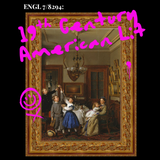 ENGL 7/8294 - Sketch, Tale, Story, History, Novella: Short Form 19th Century American
Lit | Dr. Jeffrey Scraba | Mondays at 5:30pm
ENGL 7/8294 - Sketch, Tale, Story, History, Novella: Short Form 19th Century American
Lit | Dr. Jeffrey Scraba | Mondays at 5:30pm
We will investigate the flourishing of short form literature during the 19th century, from its beginnings in the sketches of Sarah Josepha Hale and Washington
Irving through the modern short stories of Kate Chopin and Charles Chesnutt. By looking
at their circulation in magazines and gift books, we will put two of the century’s
most celebrated writers, Nathaniel Hawthorne and Edgar Allan Poe, into contexts that
illuminate overlooked aspects of their work. We will also undertake case studies of
understudied short form genres: novellas by Herman Melville, Frederick Douglass, and
Louisa May Alcott; and episodic histories by Caroline Kirkland and Sarah Winnemucca.
Finally, we’ll revisit many familiar authors in order to investigate Christopher Looby’s
claim that “there is something fundamentally queer about the most distinctively American
literary genre,” the short story. May be repeated for a maximum of 6 credit hours when topic changes.
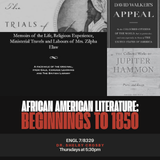 ENGL 7/8329 - AfAm Lit Beginnings to 1850 | Dr. Shelby Crosby | Thursdays at 5:30pm
Beginning in 1619 when the first 20 Africans landed in Virginia the African has been
a “problem” for the American Experiment. In this course, we will examine African American
literature through a historical framework that reflects the complexity of the African
slave trade, American slavery, and the development of a nation under such a cruel
and inhumane system. Starting with colonial “America” and ending with the second African
American novel, The Garies and Their Friends, we will interrogate how early America was shaped by the African presence on its
shores. We will explore the slave narrative, radical political tracts, spiritual conversion
narratives, poetry, and sermons as a way to understand early America and the emerging
African “American.”
ENGL 7/8338 - Baraka & the Black Arts Movement | Dr. Kathy Lou Schultz | Wednesdays
5:30-8:30pm
Studies in the work of Amiri Baraka and other writers of the Black Arts Movement.
 ENGL 7/8462 - Contemporary Irish Literature: Fictions of the Nation | Dr. Carey Mickalites
| Tuesdays 5:30-8:30pm
ENGL 7/8462 - Contemporary Irish Literature: Fictions of the Nation | Dr. Carey Mickalites
| Tuesdays 5:30-8:30pm
Today’s Irish fiction is certainly not all “British,” nor does it constitute “Commonwealth”
literature. This is in part because there are two Irelands: the Republic and Northern
Ireland. These two entities are divided by nationality, trade policies, religion,
and to some extent culture; but writers from either side of the border call themselves
“Irish,” and it is from this shared value of literary expression in mind that we will
explore a range of internationally recognized Irish fiction from the late 1960s to
the present. Our overarching approach will balance an attention to Irish literary
production in its historical and material contexts, within themed clusters, and the
practice of close reading for form, detail, and style. Themes might include: Northern
Ireland and “the Troubles”; Reckoning with the Colonial Past; and the Celtic Tiger,
Immigration, and Race (the latter referring to Ireland’s economic boom, 1995-2007).
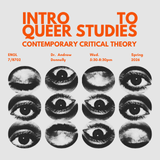 ENGL 7/8702 - Contemporary Critical Theory: Introduction to Queer Studies | Dr. Andrew
Donnelly | Wednesdays 5:30-8:30pm
ENGL 7/8702 - Contemporary Critical Theory: Introduction to Queer Studies | Dr. Andrew
Donnelly | Wednesdays 5:30-8:30pm
One of the most influential developments to come out of English departments in the
past 40 years has been the field of queer theory. Moving beyond the study of gay and
lesbian literary representation, queer theory examines, critiques, and historicizes
what appears permanent, natural, or normal about gender, sexuality, and identity.
That approach—building from theories of psychoanalysis, social construction, and performativity—might
make queer theory exemplar among post-structuralist and post-modernist approaches.
It equally makes queer analysis especially useful when intersecting with analysis
of race, class, nationalism, or colonialism. This course offers an introduction to
queer studies, with emphasis on its intersection with other critical and theoretical
approaches. While the course will focus on queer-studies approaches to literature
and cultural history, it aims to be useful for those graduate students in the fields
of rhetoric, communication, linguistics, and creative writing, as well as history
and other humanities or social science fields.
Writing, Rhetoric, & Technical Communication:
ENGL 6619 - Web Design & Online Writing | Dr. Chloe Robertson | Online
Principles and techniques of creating online user help for software and usable web
sites; emphasis on needs of technical writers in professional development environment;
task analysis, information architecture, content management, single sourcing, visual
rhetoric, navigation, usability testing; technology tools intensive.
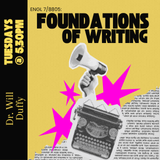 ENGL 7/8805 - Foundations of Writing Studies | Dr. Will Duffy | Tuesdays 5:30-8:30pm
How do we know what we know about writing? How do we know where we know about writing? This graduate seminar treats Writing Studies as a living map—one
shaped by competing histories, intersecting subfields, and evolving relationships
among rhetoric, composition, and technical communication. Students will trace how
Writing Studies has defined (and redefined) itself through its institutions, pedagogies,
and public engagements, and explore where new terrains—digital writing, multimodal
composing, AI-mediated authorship—extend or challenge those boundaries. Students will
position themselves within this map by engaging foundational and emerging scholarship,
designing small-scale research explorations, and developing critical scaffolds for
their current and future work in the field.
ENGL 7/8818 - Collaborative Writing | Dr. Katherine Fredlund | Online
This class considers collaborative writing as both a subject of study and a practice/method.
Students will read and discuss interdisciplinary research about collaborative writing
before collaborating with each other to put that research into practice. Students
will also learn about collaboration as a method to foster learning and collaborate
as a class to write a Scenario Based Assessment. The course has two primary purposes:
first, to understand the research on collaboration, primarily in the field of Writing
Studies, and second, to help students learn how to use research-engaged reflection to
foster stronger collaborations.
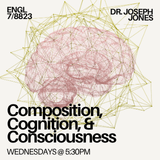 ENGL 7/8823 - Topics in Composition | Dr. Joseph Jones | Wednesdays 5:30-8:30pm
What happens to us when we write? What happens in us as we write? Writing instruction
became an object of academic study in the mid-twentieth century, and early theorists
wondered about invention: where do our ideas come from? In the 1970s and 1980s, “cognitivists”
tried identifying and describing what occurs in the brain during the production of
written discourse. The social turn upended things, with some decrying the cognitivists
for what was characterized as their sort of black box concept of mentation that excluded
the social, cultural, and political influences brought to bear when one picks up a
pen or sits down at a keyboard to compose. Neuroscience advanced. Consciousness studies
emerged as an interdisciplinary field of inquiry. The specter of AI looms. Do we now
know more about what happens in our brains when we write? Do we understand how writing
may affect, or be implicated in, consciousness?
 ENGL 7/8890 - Topics in Professional/Technical Writing | Dr. Shiva Mainaly | Mondays
5:30-8:30pm
ENGL 7/8890 - Topics in Professional/Technical Writing | Dr. Shiva Mainaly | Mondays
5:30-8:30pm
This course refuses resolution, examining how neuroscience destabilizes reader-based
prose by revealing that cognition itself is distributed across brains, bodies, and
environments. Along this line, we explore how Indigenous technical knowledge expose
Western documentation’s metaphysical commitments to linear time, discrete causation,
and atomized authorship. We investigate how TikTok’s algorithmic rhetoric instantiates
post-literate technical communication where documentation is performative, ephemeral,
and collectively authored through remix and response. We theorize technical and professional
writing not as a discipline that applies rhetorical principles to specialized contexts,
but as the material-discursive apparatus through which techne becomes thinkable in
any historical moment. From clay tablets documenting Mesopotamian astronomy to large
language models generating pharmaceutical documentation, technical and professional
communication is where human negotiate what it means to know, to make, and to share
knowledge.