
The Clerestory and Roof
|
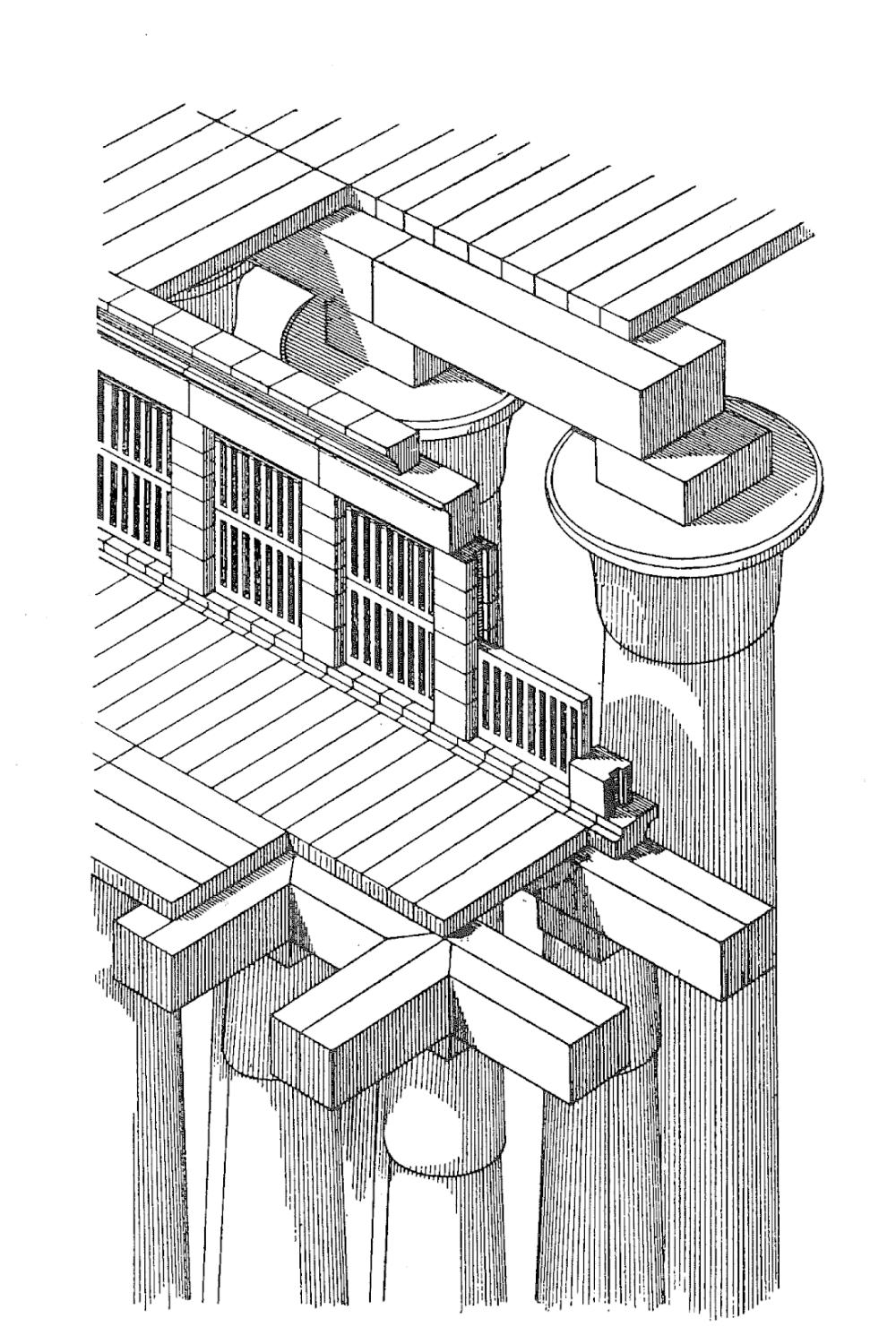
The word hypostyle means "having a roof or ceiling supported by rows of columns." The ultimate purpose of the Karnak Hypostyle Hall's 134 massive columns is to carry the load of an equally massive roof. Although flooded with sunlight today, in antiquity, the Hall was somewhat gloomy. Large slabs blocked out the sun, with a few small square holes cut in each one to admit a faint light. The roof slabs were supported by a network of ceiling beams resting on the columns. These beams are called architraves and many of them still survive. Others have fallen and large fragments of them lie in the yards surrounding the temple proper.
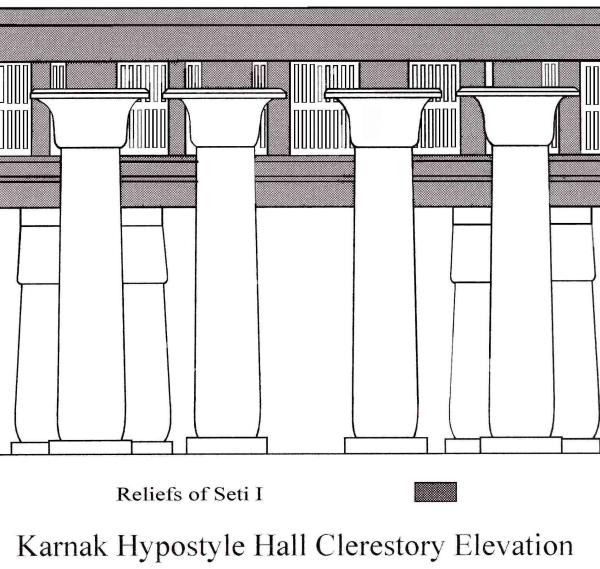
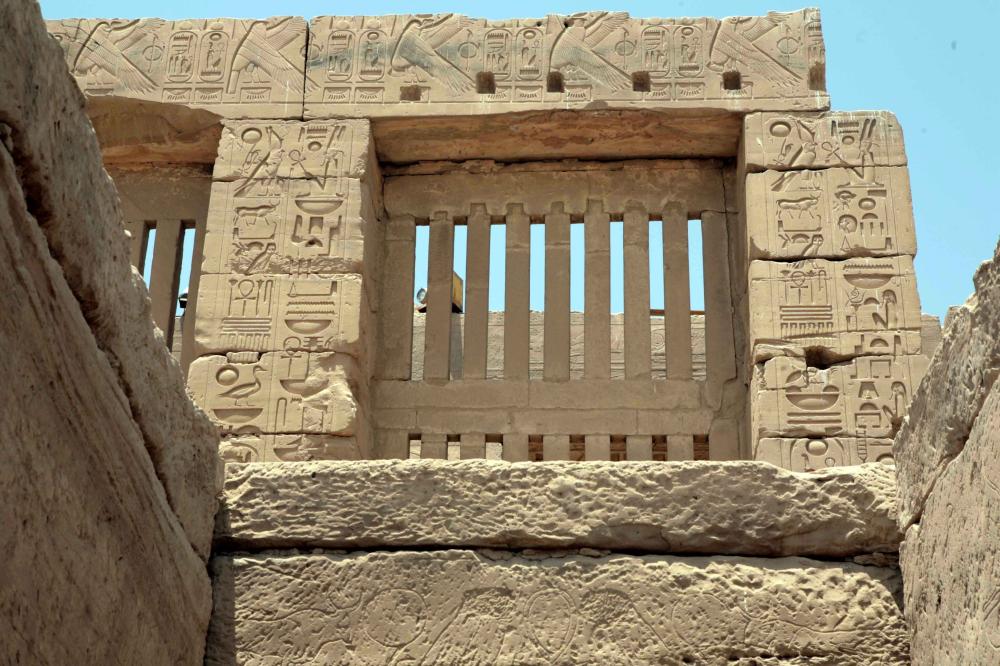
The main source of light was a series of large windows screened by giant stone grilles. The difference in height between the smaller columns and the twelve great ones along the central axis leaves an open space for these windows. The massive frames of these windows sit atop the first rows of smaller columns to either side of the great columns. The frames holding these window grilles in place were fully inscribed. The architraves above and below were carved with long hieroglyphic texts inside and repeating strings of SetyI's royal titulary on the outside of the clerestory. The inner face of the piers have scenes of the king face to face with the gods. For more about these scenes, click here.
|
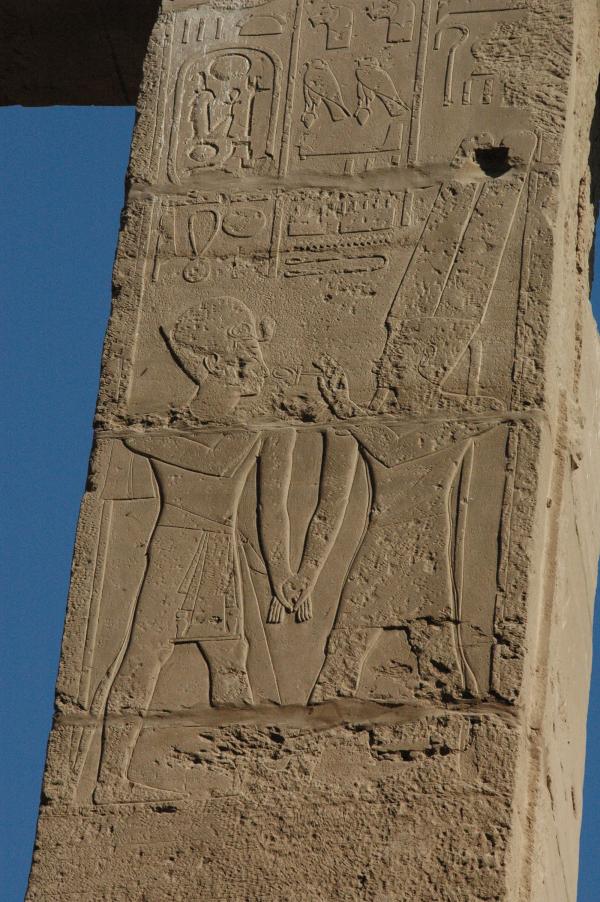
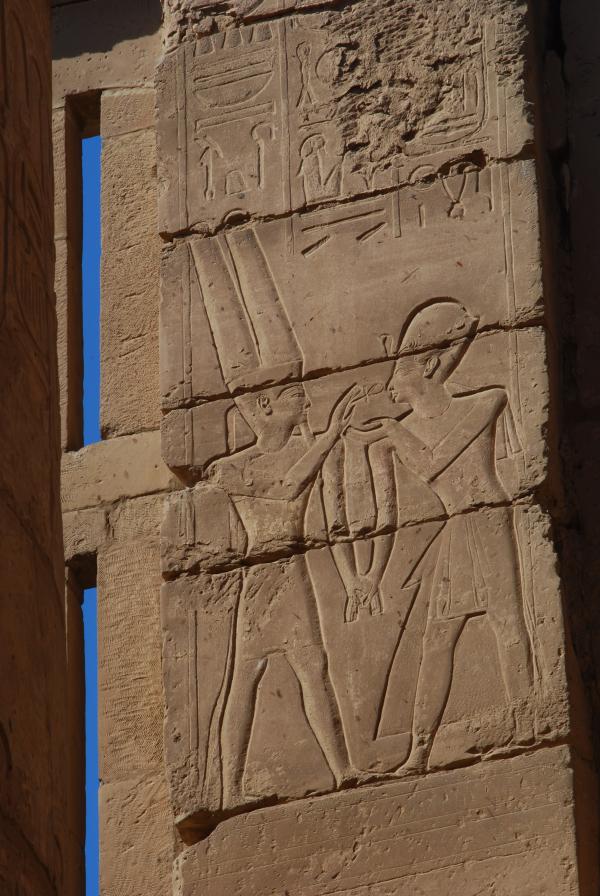
| Interior piers of the clerestory windows showing the king in the company of Amun-Re. |
The Architraves
The architraves are interesting in two respects. They contain long dedication texts and the undersides of the architraves, called soffits, have been sheltered from the elements and still retain their original bright colors.
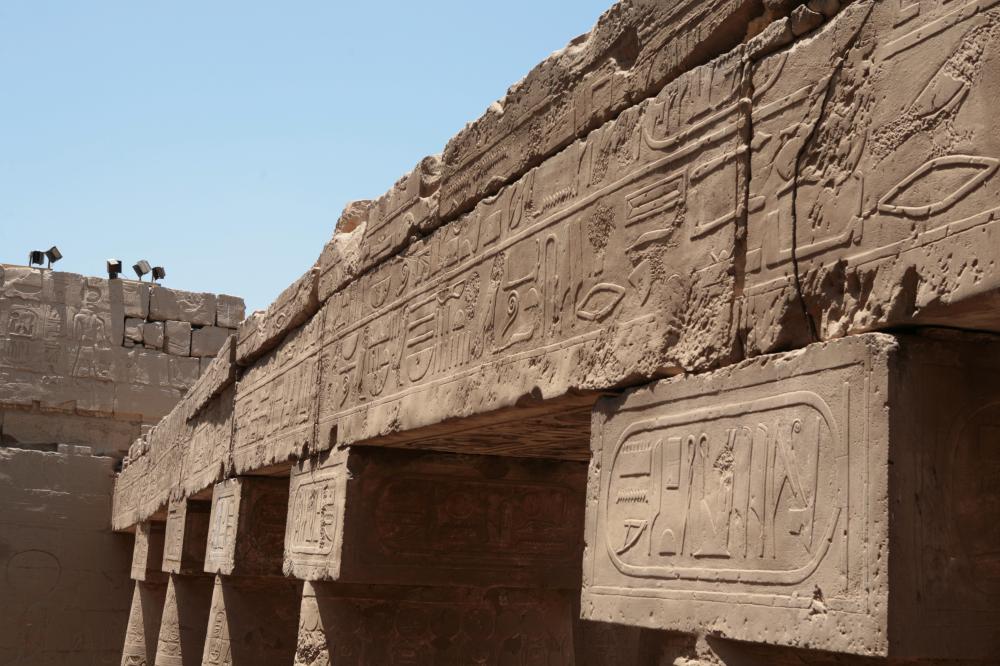
| Architraves still in situ above the abacus blocks of the smaller columns. |
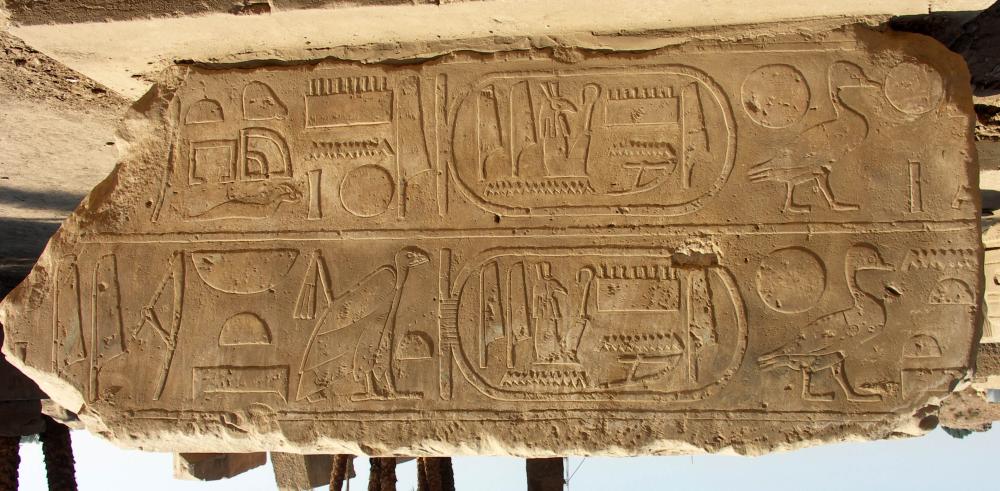
| Fallen architrave of Sety I found to the north of the north wall of the Hypostyle Hall. |
The rhetoric of these architrave texts is quite grandiose and bombastic. The king is described as a god among the gods and as a superhuman warrior. The texts give accurate descriptions of the hall and its columns although they sometimes also exaggerate, claiming the columns are coated with electrum. The most colorful text describes Seti's inspiration for building the Hypostyle Hall in the first place.
"Now this Good God (i.e., the king) is always eager to make monuments, lying awake at night, unable to sleep thinking about beneficial deeds to perform. It was His Person who gave instruction and guided the work on his monument. All his plans came to pass immediately."
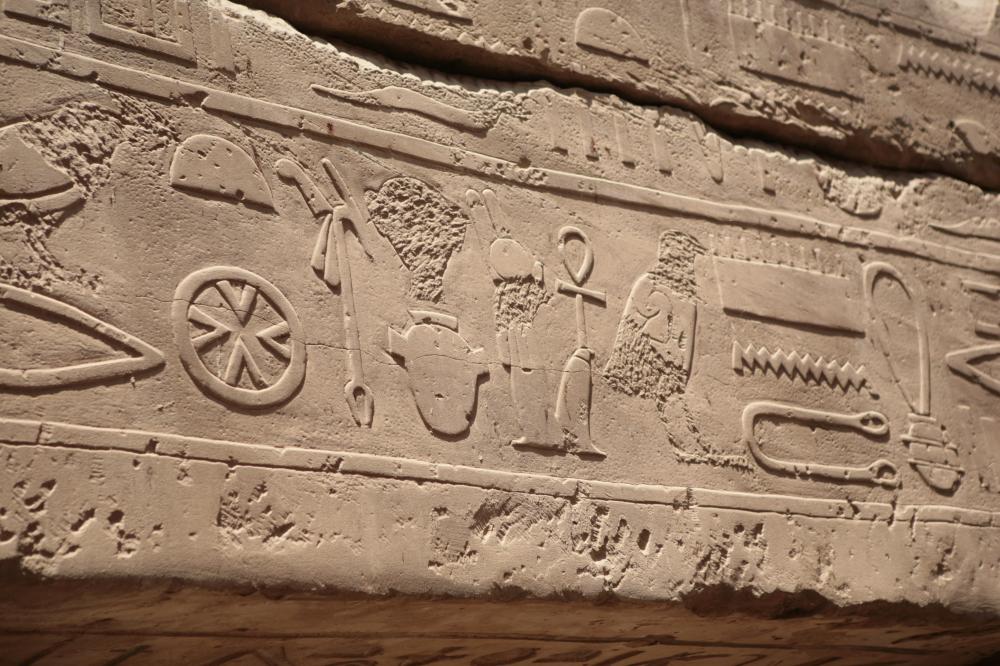 |
| An architrave from the Hypostyle Hall with a dedication texts of Sety I. |
Some of the soffits of the architraves still in situ preserve the traces of the original paint used to decorate them.
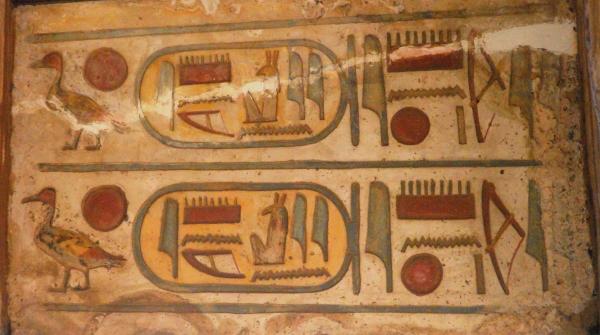
| Soffit still preserving color, with the cartouches of Sety I. |
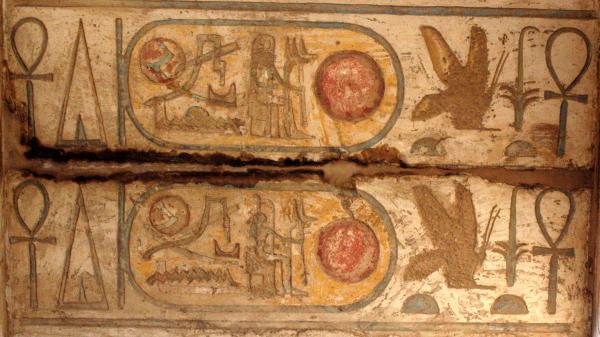
| Soffit still preserving color, with the cartouches of Ramesses II that show traces of his original short prenomen. |
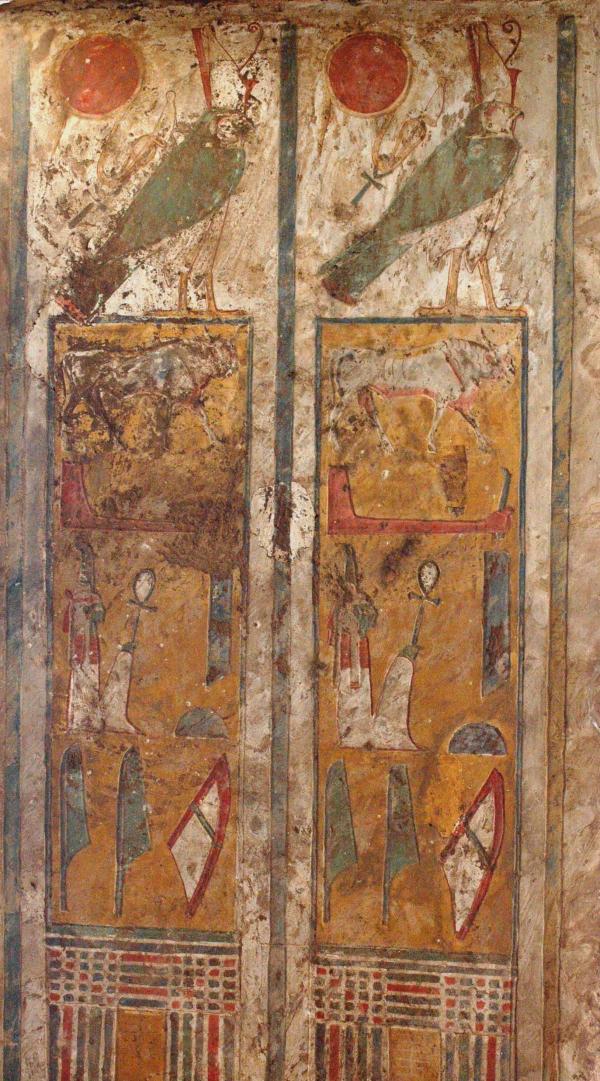
| Soffit with the Horus name of Ramesses II. |
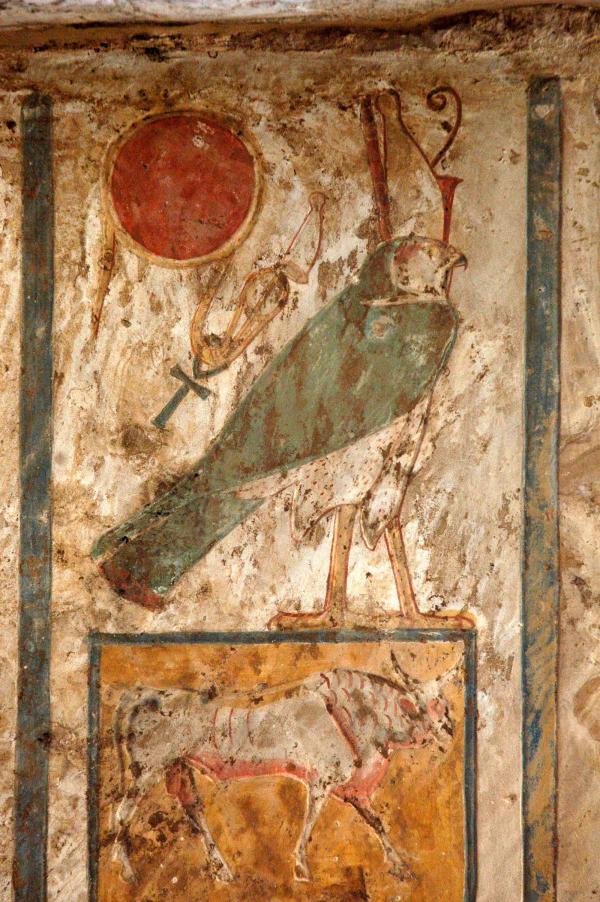
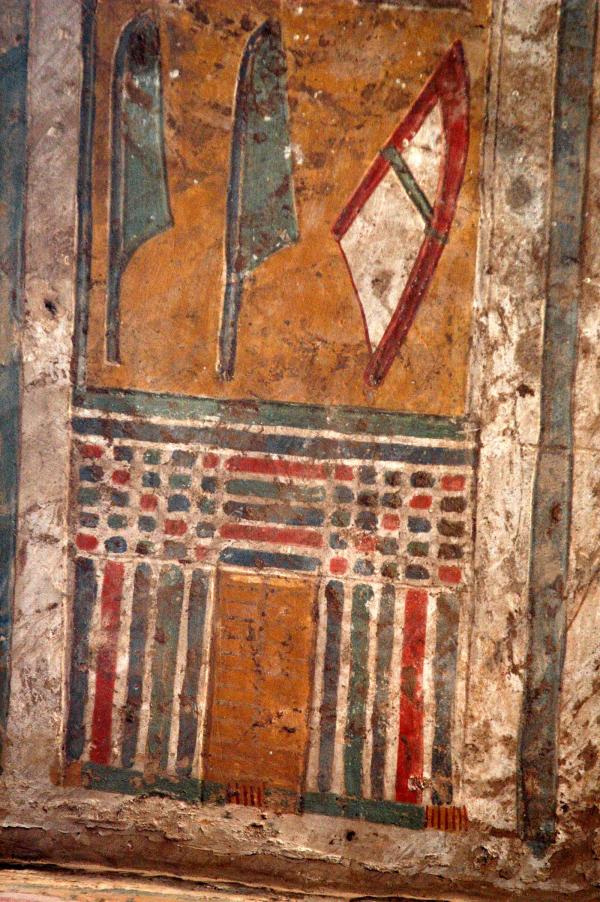
| Details of the same soffit. |
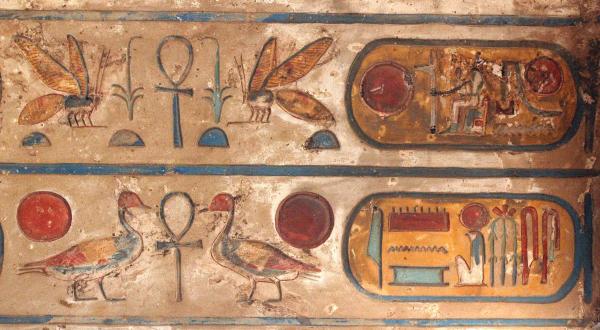

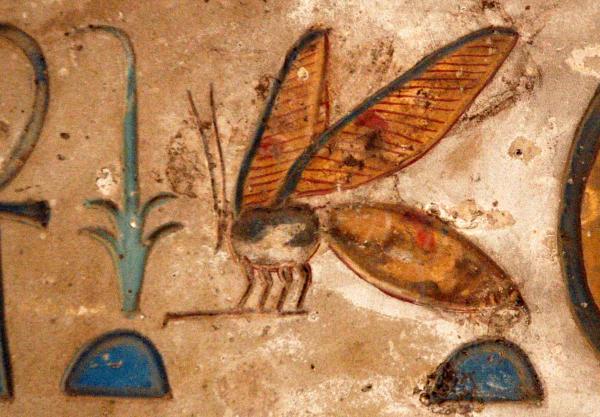
| Soffit with the prenomen and nomen cartouches of Ramesses II (above) with a detail of his nomen cartouche (below left) and of the nsw-bity preceding his prenomen (below, right). |