

Monthly Faculty Spotlight - June 2025
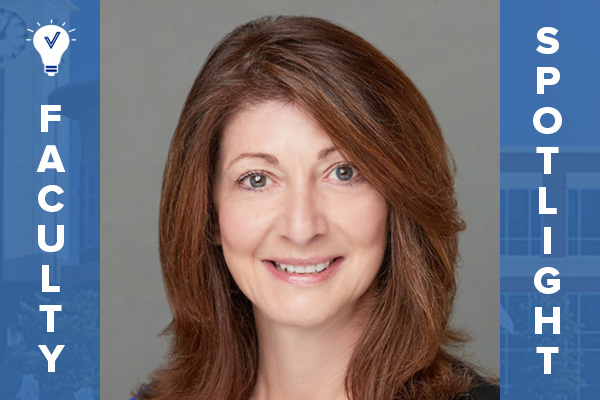
Q&A with Dr. Debra Bartelli, DrPH
Research Associate Professor of Urban Health
- What brought you to the U of M School of Public Health?
In the fall of 2014, I was invited to join the faculty by the School’s first Dean, Dr. Lisa Klesges. Prior to that I was the director of Healthy Shelby, a county-wide, multi-sector consortium designed to address the triple aims of improving healthcare delivery, improving health outcomes, and reducing the cost of care. This work was focused on three areas: infant mortality, chronic disease management and prevention, and end of life care. The School of Public Health was a partner in this effort, and I worked closely with Dr. Klesges. She found value in my strong and diverse community connections and my ability to conduct community-based research and evaluation and thought I would be an important addition to the faculty. - What is the broad focus of your research?
Broadly, my research can be characterized as community-based program evaluation. Currently my work focuses on two main areas: prevention and mitigation of childhood lead exposure and resource needs and self-care management barriers of people living with type 1 diabetes. Over the past several years, I’ve also done a considerable amount of evaluation research in the areas of ACEs and childhood trauma and have worked with SPH colleagues on various environmental exposures. - What inspired you to pursue this particular area of research?
I have long been involved in program evaluation, having first had opportunities to work on evaluation projects as a MPH and DrPH student at Columbia University. I later was hired by one of my Columbia professors, Dr. Susan Philliber, to head a Memphis evaluation office with her research firm, Philliber Research Associates, where I worked for 10 years. During that time, I conducted multi-year program evaluations for more than 80 Memphis-based nonprofit organizations, as well as evaluations for the CDC in Thailand, the US State Department in India, journalists in Cairo, and program evaluations in numerous US cities including Chicago, Detroit, Flint, Lexington, and Sacramento.
I believe that evaluation research is essential for understanding the effectiveness and equity of health interventions and policies. It can provide evidence-based insights to inform decision-making and improve health outcomes across populations. But conducting public health evaluation research is also a deeply enriching experience for me, as it has exposed me to a wide range of interventions tackling diverse and complex health issues. Each project brings unique challenges, requiring flexibility, adaptability and openness to learning new subject matter, and it has given me the opportunity to engage with different communities and stakeholders. The research that I do has given me a broad, interdisciplinary understanding of public health. In other words, for me, evaluation research is not just about measuring impact—it has been a continuous learning journey that has given me insight into the real-world dynamics of both health and social systems. - What is the most exciting project you are currently working on?
I’m really excited about the work I’m doing with regard to childhood lead exposure. For the past two years, I’ve been engaged with the Memphis Lead Coalition – a collection of city and county agencies, nonprofit organizations, healthcare providers, and affected family members focused on reducing the incidence of lead exposure among Shelby County children aged 6 years and younger. We have a small grant from Shelby County government that has allowed us to explore the policy and system-level issues that either facilitate or hinder attempts to address this issue and we’ve been able to work with families with affected children to develop educational resources for healthcare providers and the general population. Our goals include improving inter-agency service coordination and increasing access to resources for families. - How does your research impact or benefit the broader community or public health field?
And how do you envision your research evolving in the next few years?
I’m a very applied researcher. Nearly all of my research is rooted in real-life settings and designed to have a direct, meaningful impact on the communities involved. By working closely with local organizations, health departments, and community members, my research helps assess and improve interventions that address complex public health issues such as health disparities, chronic disease prevention, and access to care. I believe that this applied approach not only strengthens public health practice but also empowers communities to drive sustainable change based on evidence.
I also bring my research experience directly into the classroom to create a learning environment that is grounded in real-world application. By drawing on current and past projects—many of which have direct community impact—I help students connect theory to practice, illustrating how evaluation methods are used to address complex public health challenges. I incorporate case studies, hands-on exercises, and discussions based on actual research scenarios, and I give students the opportunity to work with local organizations to plan and implement real-life program evaluations. I think this approach not only deepens their understanding of evaluation but also prepares them to think critically and act effectively in diverse public health settings. - What is the coolest training or program you've been a part of, or your favorite conference
you've attended?
By far, the best training program I’ve experienced was as a NIH Translational Health Disparities Scholar. This was a competitive opportunity for 25 scholars from institutions across the country to participate in an intensive two-week program at NIH. I had the opportunity to meet with NIH researchers and learn from other top scholars from the US and around the world. It was a phenomenal opportunity and I still use much of what I learned there in the classroom. - What is your favorite self-authored manuscript?
I would have to say that the PLoS ONE article, “Microbial diversity of source and point-of-use water in rural Haiti a pyrosequencing-based metagenomic survey” is one of which I’m the proudest. This article was the result of one of my favorite projects in which I took five MPH students and one UTHSC medical student with me to rural Haiti for two weeks to conduct five different research projects. One of the students worked with me to collect more than 100 source and point-of-use water samples over a 22-square-mile mountainous area that had no paved roads. The work was difficult but important to the local community that had no access to improved or protected water sources. Analysis of the samples in the EH lab on the 3rd floor of Robison identified 38 different bacterial families, most of which were human pathogens. We quickly communicated this information back to leaders of the local community in Haiti. The following summer three of the original students and one additional MPH student accompanied me back to Haiti to present our research and we worked with community members to identify potential solutions to the problem of contaminated drinking water.
As an aside, the other four students on the first trip to Haiti conducted research on childhood malnutrition, household use of in-home water treatment systems, and common health complaints of attendees at a local health clinic. - What kind of research would you like to be doing that you haven't yet had the opportunity
to do?
I’m happy doing what I’m doing now.