


Monthly Faculty Spotlight - July 2025
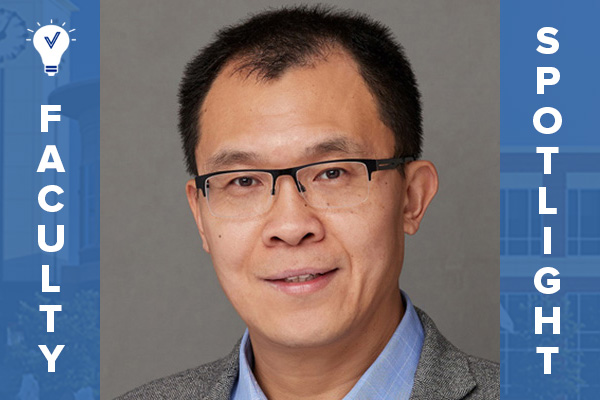
Q&A with Dr. Yong Yang, PhD
Associate Professor
- What brought you to the U of M School of Public Health?
After working for several years as a postdoctoral fellow and research faculty, I was seeking an opportunity to begin a tenure-track position. Although the U of M School of Public Health is relatively small, it struck me as a promising and welcoming place to build my academic career. - What is the broad focus of your research?
My research focuses on the social determinants of health, especially how the built environment, neighborhoods, transportation, and social isolation influence population health. I pay particular attention to mental and cognitive health among older adults, health-related behaviors such as physical activity, active travel, diet, tobacco and alcohol use, as well as chronic conditions like obesity. Methodologically, I have applied systems thinking and systems science approaches to public health for several decades. More recently, I have also begun using behavioral economics methods, such as discrete choice experiments, to better understand health behaviors. - What inspired you to pursue this particular area of research?
The study of aging and health is increasingly important as people are living longer and the global population of older adults continues to grow. Aging brings unique challenges—including chronic illness, cognitive decline, and mobility limitations. My research aims to help us better understand how to promote health, independence, and quality of life for older adults. - What is the most exciting project you are currently working on?
One of my most exciting projects is titled Transport Disadvantage and Dementia: A Longitudinal Study of Trajectories, Impacts, and Interventions. Transport disadvantage—defined as unmet transportation needs and limited access to transportation—may increase the risk of dementia in older adults, but this relationship is not yet well understood. We are leveraging a nationally representative longitudinal dataset to analyze how transport disadvantage evolves over time, its impact on dementia risk, and how alternative transportation options (e.g., public transit) might serve as interventions. This study aims to identify transport disadvantage as a modifiable risk factor for dementia and to inform policy strategies for improving transportation access and reducing dementia risk. - How does your research impact or benefit the broader community or public health field?
And how do you envision your research evolving in the next few years?
Over the past decades, my research has generated evidence-based insights that have influenced public health policies across areas such as transportation, tobacco control, urban planning, and emergency response. By integrating advanced modeling techniques—including agent-based modeling, GIS, and systems science—I bridge empirical data with real-world policy applications. This work supports stakeholders in designing more equitable and effective community health interventions. In the coming years, I plan to focus on how neighborhood environments and transportation infrastructure affect older adults’ daily behaviors (e.g., mobility, social interaction) and their mental and cognitive health. - What is the coolest training or program you've been a part of, or your favorite conference
you've attended?
Years ago, while applying agent-based modeling to study how policies affect adult walking and children’s active travel to school, I attended the “Walk21” conference in Mexico City. It was a great opportunity to gain interdisciplinary knowledge beyond public health and outside of the U.S. A highlight of the trip was participating in a group bike tour around the Mexico City Metropolitan Cathedral—an unforgettable and enjoyable experience. - What is your favorite self-authored manuscript?
My favorite is titled A dynamic framework on travel mode choice focusing on utilitarian walking based on the integration of current knowledge, Journal of transport & health in 2016. - What kind of research would you like to be doing that you haven't yet had the opportunity
to do?
In the realm of agent-based modeling (ABM), I hope to:- Standardize the modeling process, enhance transparency, and lower barriers to adoption for other researchers;
- Identify common features in the use of ABMs for specific public health topics—such
as addictive behaviors, lifestyle behaviors, and environmental influences—and develop
shared paradigms and prototype models to facilitate broader use in the research community.
- Are there any publications, awards, or recognitions you would like us to include in
the spotlight?
I would like to highlight the following recent publications:- Yang Y. (2025). Public Transit Use Among American Older Adults: Insights from a Nationally Representative Survey, Journal of Transport and Health
- Yang Y., Jiang Y. (2025). The Association Between Social Isolation and Incident Dementia Among Older Adults: Evidence from the National Health and Aging Trends Study, Innovation in Aging
- Yang Y., Jiang Y., Wen M., Wang L. (2024). A Dual Group-Based 11-Year Trajectory Analysis of Cognitive Impairment and Transport Restriction for Community-Dwelling Older Adults, International Journal of Geriatric Psychiatry