


Monthly Faculty Spotlight - September 2025
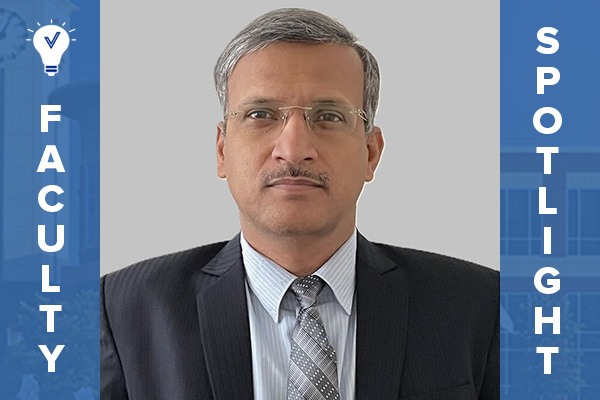
Q&A with Dr. Kallol Kumar Bhattacharyya, MBBS, MA, PhD
Assistant Professor, Health Systems Management and Policy, University of Memphis School of Public Health
- What brought you to the U of M School of Public Health?
I am specifically attracted to the position because of the possibility of collaborating in interdisciplinary academic programs focusing on public health and practice-based research, with opportunities for intervention development, implementation, and evaluation, in addition to working in my area of expertise in translational research on aging. I continually explore the possibilities of collaborating with the diverse faculty members and students at the University of Memphis School of Public Health, as well as community partners, to improve the health and well-being of older adults at both local and global levels. Moreover, the visionary and strategic leadership of Dean (Dr.) Ashish Joshi drew me here to my current position. - What is the broad focus of your research?
My research interests revolve around two general areas related to aging: Health services research and health promotion. I am particularly focused on the individualized care provided in long-term care, especially in nursing homes, and the economics of long-term care, including how regulatory oversight and resident choices in the nursing home market impact health outcomes. I am simultaneously focused on the risk and protective factors and alternative therapeutic interventions for Alzheimer’s disease and related dementia. - What inspired you to pursue this particular area of research?
I feel fortunate to have gained working experience in India as both a formal and informal caregiver for individuals with dementia. In addition, I learned a lot from my past advisors in the US, who nurtured my interest in long-term care, encouraged me to broaden my implementation research ideas, and helped me critically and objectively synthesize my overall thought process for interdisciplinary aging research. My goal is to improve the quality of life of cognitively impaired older adults residing in long-term care. I am exploring multiple areas and trying to connect the dots to reach my goal. - What is the most exciting project you are currently working on?
Artificial intelligence (AI) is transforming the global healthcare industry in several aspects. We are currently working on incorporating AI as a health promotional measure to advance clinical research and improve the quality of life for older adults. Other than this, I am also collaborating with a great group of interdisciplinary scholars in the Dementia ECHO project to better support older adults with dementia in Tennessee. - How does your research impact or benefit the broader community or public health field?
And how do you envision your research evolving in the next few years?
The concept of long-term care is shifting from the traditional medical model to a more promising social model, offering more post-acute care. We serve many people at a time, including residents, families, staff, and more. This needs urgent collaboration in translational research, workforce development, and community engagement. AI can potentially identify and eliminate barriers to healthcare by transforming the everyday delivery of primary care. In the next few years, AI will be the driving force in the healthcare industry; I want to be a part of reshaping the future of medicine. - What is the coolest training or program you've been a part of, or your favorite conference
you've attended?
I have extensive clinical and administrative experience, having worked as a physician in India before rejoining academia, which I believe is the most valuable real-world training I have had in my life. I consider myself a change agent, and my goal for many learning contexts is to transform practice beyond how practitioners currently conceive it. With my past clinical practice in India and my current work in US academia, I am well-positioned to bring a multicultural and clinical perspective to my research, education, and mentoring.
I am also serving in multiple voluntary positions in the Gerontological Society of America, an international platform for aging research, policy, and practice of the highest quality, with exceptionally diverse scholar members/leaders. I have been attending the Gerontological Society of America’s annual conference since 2019, and it has become my favorite conference. - What is your favorite self-authored manuscript?
Over the past few years, I have published several peer-reviewed journal articles, a book chapter on longevity, and an edited book, “Health Promotion in Long-Term Care Facilities.” All of them are my favorites. However, if I have to pick one, it will be “Rethinking the Aging Transition,” a monograph that I published with Springer in 2021. - What kind of research would you like to be doing that you haven't yet had the opportunity
to do?
I believe the human brain is the most complex and advanced technology, far surpassing the capabilities of even the most advanced devices, including smartphones. Although I have not yet had the opportunity to work with that technology for health promotional purposes, it is my ultimate goal. - Are there any publications, awards, or recognitions you would like us to include in
the spotlight?
The pioneering idea of an age-friendly health system, i.e., the 4Ms model, is significant for nursing homes; however, it does not identify all components of nursing home care. Along with residents, care staff, and administrators are integral parts of nursing homes. Incorporating the central role of caregivers, we proposed a new 8Ms framework to describe the age-friendly nursing home more comprehensively (Bhattacharyya, K.K., Molinari, V., Black, K., & Whitbourne, S.K. (2023). Creating age-friendly nursing homes: The time is now. Gerontology & Geriatrics Education, 44(4), 613–630. https://doi.org/10.1080/02701960.2022.2106981).
Finally, it is a great honor to be featured in the University of Memphis Research & Innovation newsletter for leading the UofM Gerontology and Positive Aging research initiative. I am grateful to Dr. Ashish Joshi (Dean, School of Public Health, UofM) and Dr. Cody Behles (Director of Research and Innovation, UofM) for selecting me for this role. I am working on building an interdisciplinary aging research cluster in advancing aging research at the UofM and enhancing community partnerships.