

Core Leads

Dr. Ashish Joshi
Principal Investigator, Lead
Dr. Joshi is Dean and a Distinguished University Professor of the School of Public
Health of the University of Memphis. Dr. Joshi is an innovator, entrepreneur, educator,
researcher, administrator, and mentor. He is an established population health informatics
researcher who combines his academic training in clinical medicine, public health,
and informatics to design and develop human-centered, technology-enabled interventions
to enhance population health outcomes across diverse community settings. He has extensive
experience in utilizing community and hospital-based data to implement and evaluate
informatics-enabled solutions to address social, economic, and health inequities of
the 21st century. He combines data-driven innovative entrepreneurial creative approaches
to advance excellence in public health education, and research, that can address public
health challenges in the community by preparing the next generation of public health
leaders. Despite his administrative role, continues scholarly and research contributions
toward improving the good health and well-being of individuals, families, and the
communities they live in. Dr. Joshi conceptualized the SMAART informatics model using
combined principles of the human-centered approach, humanistic, behavioral, learning,
and information processing theory to advance the achievement of Sustainable Development
Goals. He has designed and developed, standalone and internet-enabled, multi-lingual,
digital health interventions such as population health dashboards, consumer health
informatics, m-health interventions, and population-based surveillance tools across
multiple settings to improve population health outcomes.
Dr. Joshi successfully completed more than two dozen research projects in the areas
of population health informatics across multiple countries including the US, India,
Nigeria, Bangladesh, Haiti, Egypt, and Brazil. These projects were funded by several
Federal, State, and international government agencies and other private foundations.
Dr. Joshi also launched the first of its kind fully online Certificate and MS Population
Health Informatics Programs. He was awarded by the Open Society Institute to establish
the Regional Population Health Informatics Education Hub to prepare the public health
workforce with skills in population health informatics and how community data can
be utilized to design human-centered interventions for the improvement of population
health outcomes. The hub is established at BRAC James P Grant School of Public Health
with an aim to create a regional network of experts in the population health informatics
field ready to respond as a team to the next public health challenge. Dr. Joshi has
been leading CUNY SPH efforts to implement the NYC Resource Navigator Test and Trace
Program in response to the COVID-19 pandemic and secured an award of a $10 million
contract with the Housing Recovery Operations of the Mayor’s Office to implement the
aftercare resource navigator program to address COVID-19 recovery efforts. Currently,
he is the Chair of the Global Health Informatics Working Group of the American Medical
Informatics Association. He is also an author of the first textbook published on Population
Health Informatics: Driving Evidence-based solutions into practice published by Jones
Bartlett. Dr. Joshi will help establish and co-lead the Center for PH-IDEAS, collaborating
closely with Dr. Michelle Taylor, Director of the SCHD to oversee all components of
this agreement.
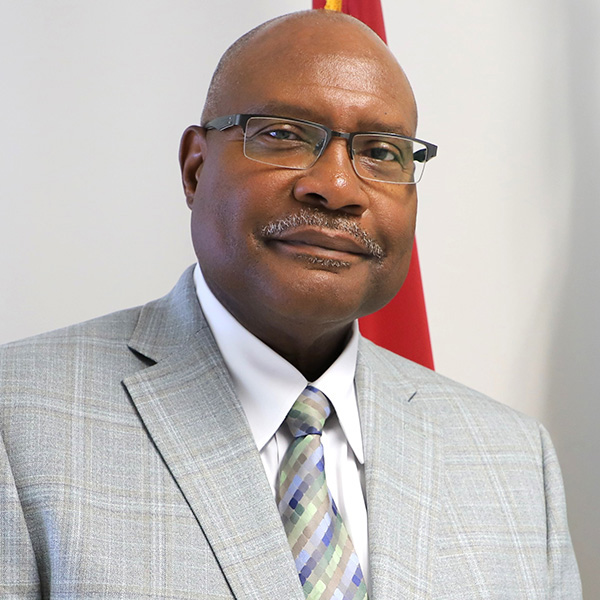
Bruce W. Randolph, MD, MPH
Co-Director
Dr. Bruce W. Randolph (aka “Dr. Bruce, the Total Wellness Doctor”) is a native of Live Oak, Florida. He attended Tuskegee Institute (now Tuskegee University) on a football scholarship and graduated Summa Cum Laude from Tuskegee University with a Bachelor of Science Degree in Biology. Dr. Randolph received his Doctor of Medicine Degree from the University of Florida’s College of Medicine. He received his Master of Public Health Degree from Johns Hopkins University School of Public Health. He received residency training in Family Medicine at the University of Arkansas, General Preventive Medicine at Johns Hopkins University, and Occupational Medicine at the University of Oklahoma. Dr. Randolph has practiced medicine for 40 years in various settings such as correction/detention facilities, county/state health department, rural health clinic, community health clinic, student/college health clinic, occupational health clinic, Job Corps Center, Indian Health Service Clinic, and private practice clinics. Dr. Randolph served as the Health Officer for the Shelby County Health Department during the COVID-19 Pandemic. He also served as the Corrections Health Officer and Administrator of Inmate Health Compliance for the Shelby County Division of Corrections in Memphis, Tennessee. Prior to becoming the Health Officer, Dr. Randolph served as an Assistant Professor in the Department of Family & Preventive Medicine at the University of Arkansas for Medical Sciences. He also established his private practice, Randolph Occupational Medicine Services (ROMS), where he specialized in Occupational Health, Workers Compensation, Disability & Impairment Evaluation, Preventive Health Care, and Total Wellness. Dr. Randolph recently established ROMS Total Wellness and ROMS Consulting Services in which he provides wellness coaching, lectures, presentations, seminars, and consulting services in the following areas:
- Public Health
- Community Health
- Occupational Health
- Health Data Analysis
- Health Advocacy
- Health Disparities
- Mental Wellness
- Physical Wellness
- Spiritual Wellness
- Stress Management
- Body Movement
- Healthy Eating
- Faith & Spirituality
Dr. Randolph is also an ordained Gospel Minister. He founded Issa Ministries, Inc., a nonprofit religious corporation which promotes holistic health and wellness through education, counseling, mentoring, and evangelism. The focus of his ministry is “Total Wellness”, the wellbeing of Spirit, Mind, and Body. Dr. Randolph has been married to his wife, Mildred, for over 45 years. They have three children: Khari (wife Ebony), Kobie, and Trinity. They have two grandchildren: Nylah and Nia.
For more information about Dr. Randolph, visit his website: www.roms-totalwellness.com
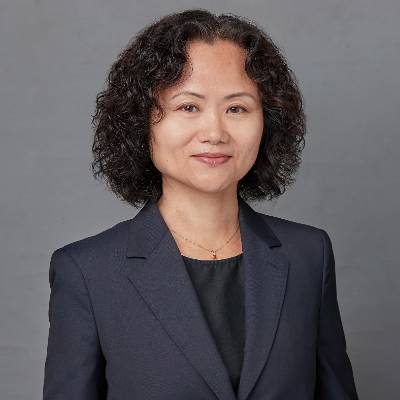
Dr. Hongmei Zhang
Co-Investigator
Dr. Zhang is a biostatistician and data scientist and Division Director in the School
of Public Health at the University of Memphis. She has vast experience in working
with public health data and strong expertise in data operation and machine learning
techniques, including methods in cluster analyses and directed/undirected network
construction and comparisons. Dr. Zhang has a long track record of federal agency
funded research as the principal investigator (R01AI121226, R21AI099367, R03HL095429)
and a co-investigator on many other grants (e.g., HRSA R40 from CDC, PC102166 from
DOD). She has more than 180 publications since 2004 plus three R computing packages
and several the publications are in high rank journals.
Regarding student training, she has taught and supervised undergraduate and graduate
students and has strong expertise in mentoring graduate students and post-doctoral
fellows. Since 2003, she has taught several courses (mostly graduate leveled courses)
as an independent single instructor and supervised/advised more than 20 graduate students
(and two post-doctoral fellows) on projects related to data sciences. Dr. Zhang will
be responsible for UofM collaborative efforts in leading Strategy A3 data modernization
to improve data infrastructure and develop and implement data modernization for the
SCHD.

Dr. Debra Bartelli
Co-Investigator
Debra Bartelli, DrPH, is a Research Associate Professor of Urban Health and the Director of Undergraduate Programs. She received her MPH and doctoral degrees from Columbia University Mailman School of Public Health. Before joining the University of Memphis faculty, Dr. Bartelli worked for a national research firm conducting evaluations for non-profits, foundations, and government agencies. She also directed a multi-sector initiative in Shelby County designed to improve health outcomes, improve quality of care, and reduce healthcare costs with a focus on infant mortality reduction, chronic disease prevention, and end-of-life care. Dr. Bartelli's public health interests are diverse and include the built environment, adverse childhood experiences (ACEs), environmental policy, food insecurity, and program evaluation. She is a founding member of the University’s iIMPACT Center. She also conducts fieldwork focused on improving public health infrastructure, access to clean water, and reducing food insecurity in rural Haiti.
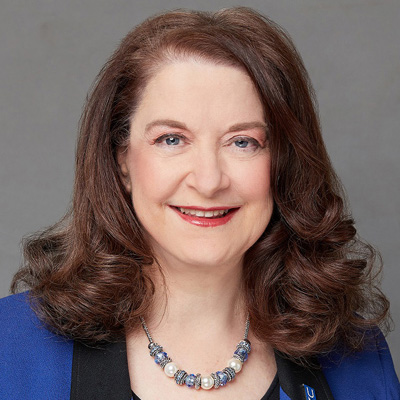
Dr. Marian Levy
Co-Investigator
Marian Levy, DrPH, RD, FAND is Professor and Associate Dean of the School of Public
Health at the University of Memphis. Dr. Levy received her doctorate in public health
from UCLA, with a fellowship from the National Cancer Institute. A Registered Dietitian
and Fellow of the Academy of Nutrition and Dietetics, she has spearheaded numerous
initiatives to promote health equity, support social justice, and provide effective
COVID response. Since 2005, she has served on NIH special emphasis review panels for
the National Institute for Minority Health Disparities and has a robust research portfolio.
Over the past 25 years she has collaborated on numerous community-based research initiatives
to promote health equity, support social justice, and provide effective COVID response.
Dr. Levy has enjoyed a long-standing (15-year) collaboration with the Shelby County
Health Department, first as a consultant to their pandemic flu planning, later initiating
the Academic Health Department partnership with the University of Memphis School of
Public Health, and most recently collaborating on community research to contain COVID-19.
Additional collaborations with the SCHD have pertained to the county-wide health needs
assessment (MAPP) process; opioid epidemic; infant mortality; and workforce development.
As Associate Dean, she has coordinated the School’s Public Health Summer Institute
for several years, in which SCHD staff received training in a range of topics (e.g.,
health equity, social determinants, Public Health 3.0, infectious disease epidemiology,
leadership development, data management, SAS, and R). Dr. Levy has held several leadership
posts, including President of the Tennessee Public Health Association. She currently
serves on the Governing Council of the American Public Health
Association and as a Site Visitor for the Council on Education for Public Health,
the accrediting body for Schools of Public Health. Dr. Levy will be responsible for
UofM collaborative efforts in leading Strategy A2 to strengthen the foundational capabilities
for the SCHD related to organizational competencies, culturally tailored communications,
policy development, community partnerships, and effective emergency response.